Option A
Hyperbaric Oxygen Therapy
Breathing pressurized oxygen in a chamber to dramatically increase tissue oxygen saturation — used for healing, neuroplasticity, and stem cell mobilization.
The Full Service PageHyperbaric oxygen therapy and red light therapy are both cellular-level recovery modalities, but they work through entirely different mechanisms. HBOT floods the body with oxygen under pressure; red light delivers specific wavelengths of light to cells. Many members use both — sequenced thoughtfully, they target different aspects of cellular health.
Option A
Breathing pressurized oxygen in a chamber to dramatically increase tissue oxygen saturation — used for healing, neuroplasticity, and stem cell mobilization.
The Full Service PageOption B
Specific wavelengths of red and near-infrared light directly stimulating mitochondrial energy production at the cellular level.
The Full Service Page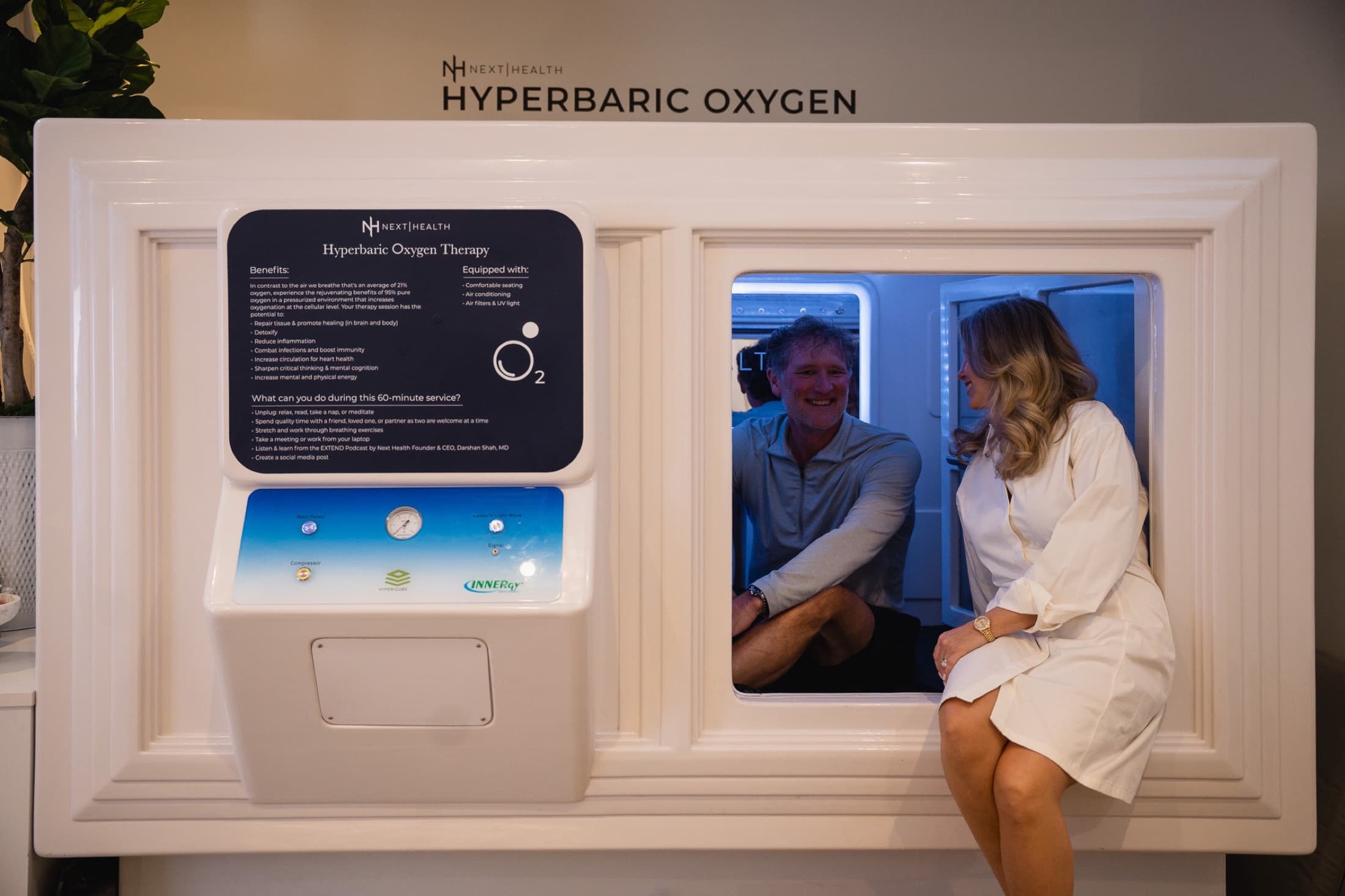
Side by Side
| Attribute | Hyperbaric Oxygen Therapy | Red Light Therapy |
|---|---|---|
| Primary Mechanism | Increases oxygen delivery to tissue under pressure | Activates mitochondrial cytochrome c oxidase via specific light wavelengths |
| Session Duration | 60–90 minutes | 10–30 minutes |
| Frequency for Results | 20–40 sessions in a series for targeted goals; 1–2× weekly for maintenance | 3–5× per week |
| Cost per Session | Higher (specialized chamber + clinical oversight) | Lower (LED panels, simpler delivery) |
| What It Feels Like | Lying inside a pressurized chamber; ear-pressure adjustment | Lying or standing under red LED panels; warmth but no real sensation |
| Best For | Brain injury, post-surgical recovery, stem cell mobilization, telomere lengthening | Skin health, daily recovery, cellular energy support, mood |
| Research Strength | Strong — FDA-approved for 14+ indications, decades of clinical data | Growing — well-supported for skin, mitochondrial health, mood |
| Time Commitment | High (60+ min, plus pre/post pressurization) | Low (can fit in a lunch break) |
Which to Pick
Pick Hyperbaric Oxygen Therapy
Choose hyperbaric oxygen if you're recovering from injury, surgery, concussion, or stroke; targeting stem cell or telomere effects; or running a clinically-indicated protocol.
Pick Red Light Therapy
Choose red light if you're optimizing daily cellular function, skin health, recovery from training, or mood — and want a practical habit you can do 3–5× per week.
Do Both
Most longevity-focused members eventually use both. Red light becomes the daily-rhythm habit; HBOT becomes the targeted protocol when goals justify the time investment.
Common Questions
Yes — they're complementary, not competing. Many members schedule them in the same visit. A common sequence is red light first (gentle cellular priming), then HBOT (heavy oxygen delivery to those primed cells), then optional infrared sauna for circulation and recovery support.
For acute healing, post-injury, post-surgical, or neurological recovery goals: hyperbaric oxygen wins. For ongoing daily-life optimization, skin, energy, and mood: red light is the more practical daily habit. Most members start with what they can actually be consistent with — and red light is more consistent for most lives.
Both have strong long-term safety profiles. Red light is essentially side-effect-free at therapeutic doses. Hyperbaric oxygen has rare ear-pressure considerations and contraindications for certain lung conditions, which a clinician screens for before your first session.
There's overlap — both reduce inflammation, both support mitochondrial function, both aid recovery. But HBOT works through oxygen saturation and pressure; red light works through photon absorption by specific cellular enzymes. The mechanisms complement rather than duplicate each other.