Infrared Sauna & Red LightInfrared Sauna · Far-Infrared Sauna · Red Light Therapy
Infrared Sauna therapy uses invisible infrared light to heat the body directly — rather than the air around it — producing a deep, profuse sweat at lower ambient temperatures than a traditional sauna and reaching tissue beneath the skin.
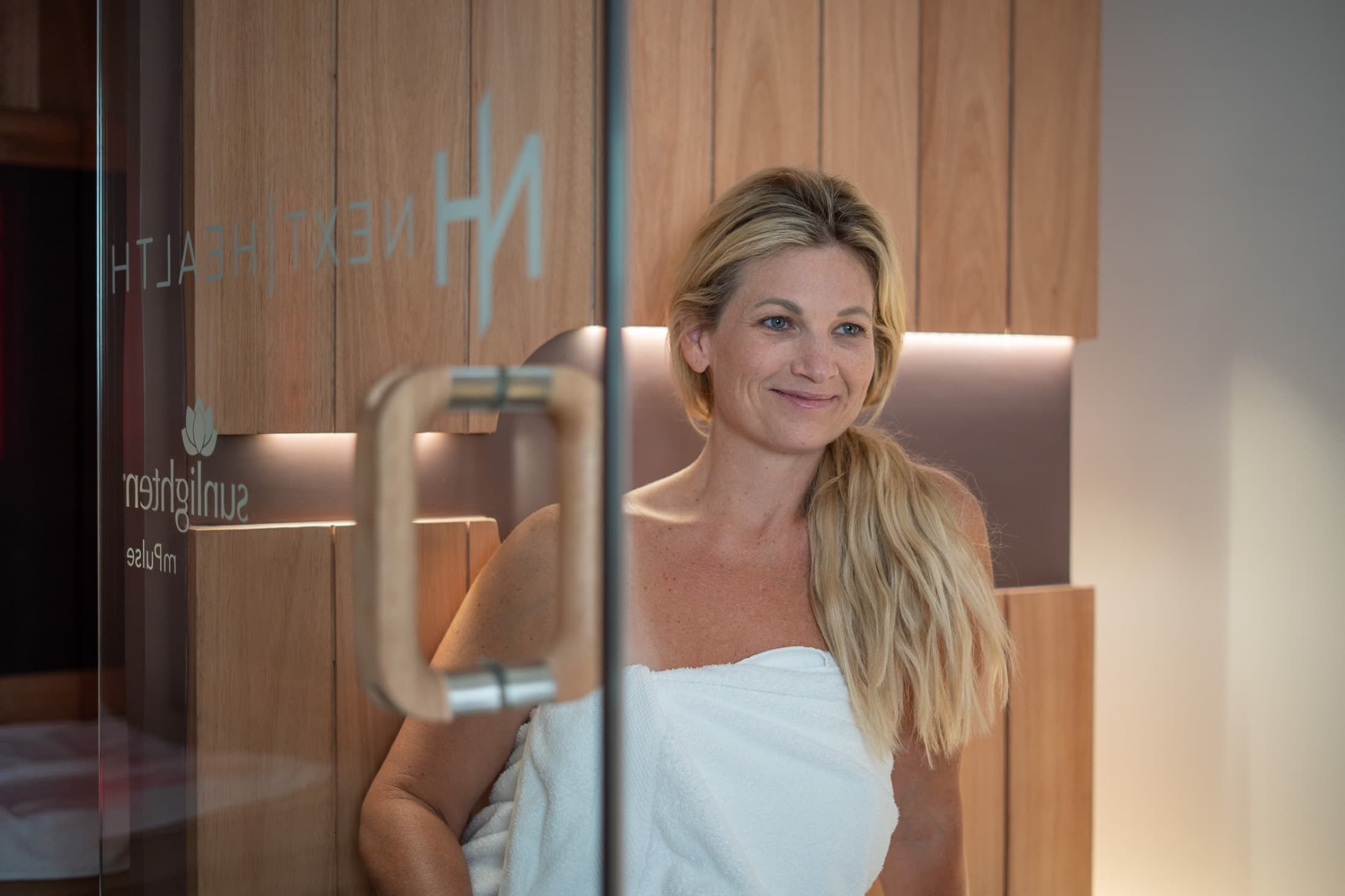
At a Glance
- Duration
- 30–45 minutes per session
- Frequency
- 3–5× per week for measurable cardiovascular and detoxification benefits
- Best For
- Recovery, cardiovascular conditioning, mood, sleep, skin health, mild detoxification support
- Session Feels Like
- Warm and quiet; profuse sweating starts around the 10-minute mark
In Practice
Gentle, penetrating light and heat that restore from the inside out.
Unlike a conventional sauna, infrared therapy warms the body directly with light, penetrating tissue to raise core temperature gently. Paired with red and near-infrared LED, it is used to support circulation, skin quality, cellular repair, detoxification, and stress recovery — all in a quiet, meditative setting.
- Penetrating warmth that supports circulation
- Red light for skin quality and cellular repair
- Aids detoxification and deep relaxation
- A meditative, screen-free reset
What It Addresses
Concerns this helps with.
- Muscle soreness and joint stiffness
- Cardiovascular conditioning
- Sleep quality
- Stress and nervous-system regulation
- Skin tone and texture
- Mild metabolic detoxification
Common Questions
Common questions, answered straight.
What's the difference between infrared and traditional sauna?
Traditional saunas heat the air to about 180–200°F, which then heats your skin. Infrared saunas use longer-wavelength light to heat your body directly, working at about 120–140°F. The infrared penetrates deeper, the experience is more tolerable, and the sweat tends to be more profuse. Both have cardiovascular benefit; many people find infrared easier to make a habit.
How long should each infrared sauna session be?
Most members find 30–40 minutes the sweet spot. Newer members may start at 15–20 minutes and build up. The body typically takes 10–15 minutes to begin meaningful sweating, so anything shorter than 20 minutes leaves much of the benefit on the table.
How often should I use an infrared sauna for results?
Research showing significant cardiovascular and mortality benefits uses 3–4 sessions per week as the threshold. Less than that is still pleasant and recovery-positive, but the dose-response gets meaningful at consistent multi-session-per-week use.
Is red light therapy the same as infrared sauna?
Related but different. Infrared sauna uses infrared light primarily to heat the body and induce sweat. Targeted red light therapy (red and near-infrared LEDs at specific wavelengths) is used at much lower heat for cellular-level effects — mitochondrial support, skin health, recovery. Many members use both, often in the same visit.