We treat light as scenery — something a room either has or doesn't. The body treats it as information, and increasingly, as a tool.
Light is the environmental signal we take most for granted. It is simply there — daylight, lamplight, the glow of a screen — and we rarely think of it as something that acts on us.
The body has no such indifference. To your biology, light is not scenery. It is information, and in some cases, it is fuel.
Light as a clock
Start with the most established role. Light is the primary signal your internal clock uses to keep time.
Every cell in your body runs on a roughly twenty-four-hour rhythm, and that rhythm is set, more than by anything else, by the light hitting your eyes. Bright light in the morning tells the system it is day: be alert, be metabolically active. Dim, warm light in the evening tells it the opposite.
Modern life scrambles this message badly. We spend daylight hours indoors, under lighting far weaker than the sky, and then flood our evenings with bright, blue-rich screens. The clock receives contradictory instructions and keeps poor time — which shows up as restless sleep, sluggish mornings, and a metabolism that never quite settles.
A great deal of "I'm just tired" is, underneath, a clock that has not been given a clear signal in years.
Your body is always reading the light. The only question is whether the message is coherent.
Light as a tool
Beyond timekeeping, certain wavelengths of light appear to do something more direct — and this is where red and near-infrared therapy enter.
Unlike visible light that mostly stops at the surface, red and near-infrared wavelengths penetrate into tissue. There, the leading explanation is that they interact with the mitochondria — the same energy-producing structures we keep returning to in any honest conversation about vitality.
The proposed effect is a modest boost to cellular energy production and a supportive nudge to the cell's own repair processes. Research has explored red light in connection with skin quality, recovery, circulation, and tissue repair. The field is still maturing, and good practitioners say so plainly. But the direction is consistent and the mechanism is plausible.
The quiet luxury of infrared heat
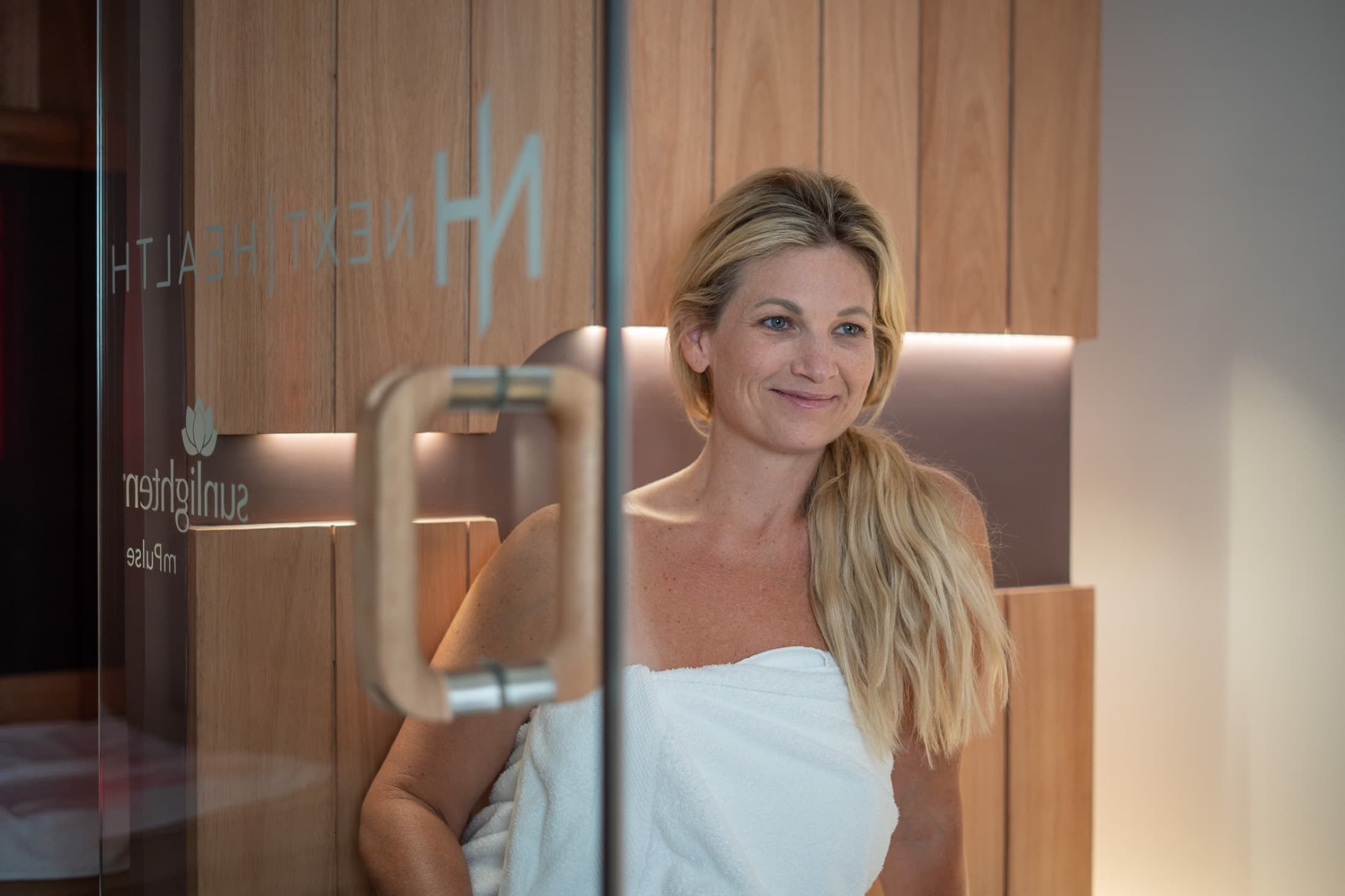
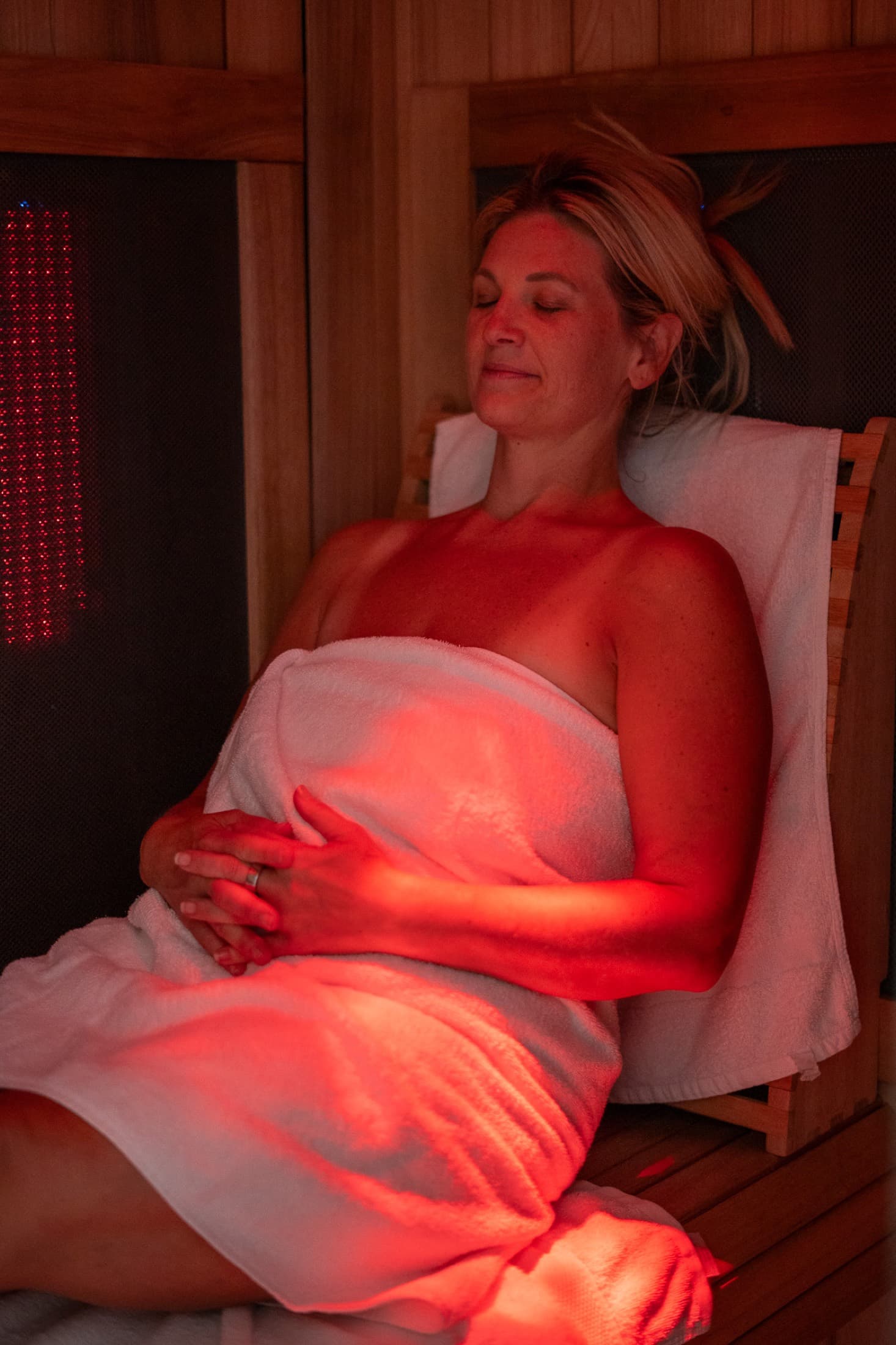
Infrared sauna belongs in the same conversation, though it works differently. Rather than heating the air around you, infrared warms the body directly with light, raising core temperature gently and deeply.
The experience is unhurried by design. A conventional sauna can feel like an endurance test; infrared feels closer to a long, warm exhale. The associated benefits — supported circulation, relaxation, a sense of release — overlap with the broader practice of deliberate heat. But the texture is different: quieter, more meditative, easier to make a habit.
A practical case
You do not need a laboratory to take light seriously. Some of the highest-value adjustments cost nothing:
- Get bright light early. Time outdoors in the first hour of your day is the single clearest instruction you can give your clock.
- Dim the evening. Lower, warmer light after sunset lets the system wind down on schedule.
- Then consider the tools. Red light and infrared are best understood as additions to good light hygiene, not substitutes for it.
The larger point is a shift in perception. Light is not neutral, and it is not just ambiance. It is one of the oldest signals your body knows how to read — and once you start treating it as something you can direct rather than merely occupy, it becomes one of the most accessible levers you have.