Option A
Whole-Body Cryotherapy
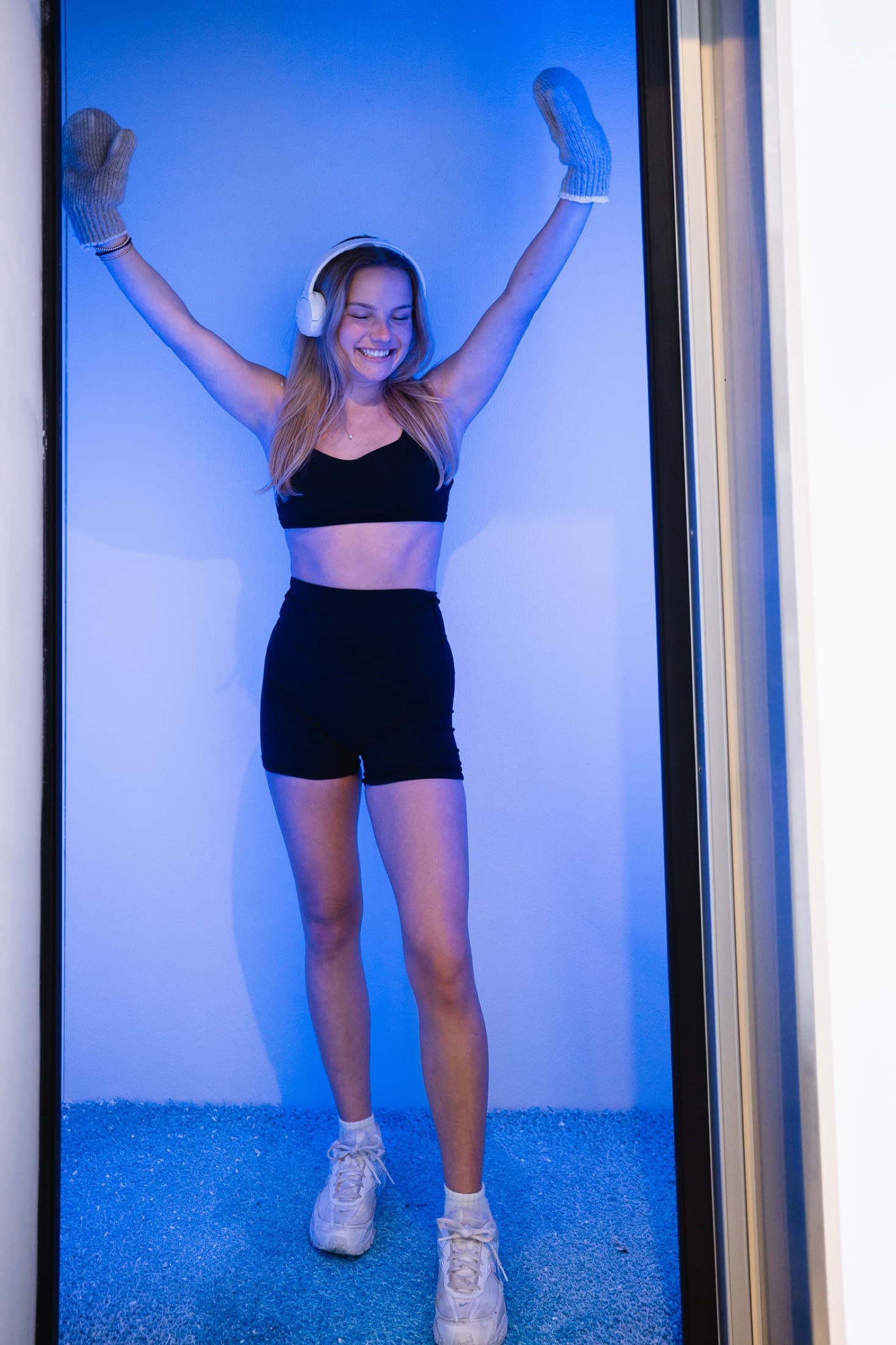
Standing in a chamber of ultra-cold dry air (-200°F to -250°F) for 2-3 minutes — rapid, intense, and easy to do consistently because it's quick.
The Full Service PageCryotherapy chambers and cold plunges are both cold-exposure interventions with overlapping benefits — but they're not the same protocol. The cold is colder in a cryotherapy chamber, the exposure is shorter, and the perceived intensity feels different. Both have research support. Many members use both, sequenced differently.
Option A
Standing in a chamber of ultra-cold dry air (-200°F to -250°F) for 2-3 minutes — rapid, intense, and easy to do consistently because it's quick.
The Full Service PageOption B
Submerging in cold water (40-55°F) for 5-15 minutes — slower onset, longer exposure, deeper-feeling cold due to water's higher thermal conductivity.
Side by Side
| Attribute | Whole-Body Cryotherapy | Cold Plunge |
|---|---|---|
| Temperature | -200°F to -250°F (dry air) | 40-55°F (water) |
| Duration | 2–3 minutes | 5–15 minutes |
| Cold Conduction | Lower (dry air is poor conductor) — feels less harsh | Higher (water conducts heat 25× faster than air) — feels more intense |
| Surface vs. Core | More surface cooling, faster vasoconstriction | Deeper core cooling, sustained adrenergic response |
| Where Body Goes | Above the shoulders stays out of the cold (chamber sits at neck) | Full submersion up to neck — no escape from the cold |
| Norepinephrine Response | Strong (5x+ baseline) | Strong (2.5x baseline at 4°C × 1 hour; faster onset at colder temps) |
| Brown Fat Activation | Activated but briefly | Activated with sustained exposure |
| Practical Friction | Low — quick in/out, dry, no shower needed after | Higher — requires changing, drying, warming back up |
| Cost Per Session | Higher (specialized equipment) | Lower at home; comparable at clinics |
Which to Pick
Pick Whole-Body Cryotherapy
Choose cryotherapy if you want frequent, low-friction cold exposure that fits into a busy day — and you want strong norepinephrine and inflammatory effects without changing clothes.
Pick Cold Plunge
Choose cold plunge if you want sustained core cooling for metabolic and brown-fat-activation goals, or you're already comfortable with longer-duration exposures.
Do Both
Many members use cryotherapy as the during-the-week habit (quick recovery between training) and cold plunge as a deeper protocol when time allows.
Common Questions
Both work. For acute recovery within 2-3 hours after training, the practical advantage often goes to cryotherapy because it's quick to fit in. For protocols emphasizing sustained adrenergic and metabolic response, cold plunges (longer exposure) win. Many serious athletes use both depending on training cycles.
Water conducts heat from your body about 25 times faster than air does. So a 50°F water bath actually extracts heat from your core faster than a -250°F dry-air chamber over the first few minutes. The dry air feels intense on the skin but doesn't reach your core nearly as fast.
Most research suggests cold exposure 4+ hours after resistance training to avoid blunting muscle adaptation. For active recovery between training days, or for inflammatory conditions, cryotherapy can be done any time. For mood and energy, many people prefer first thing in the morning.
Yes. Cold exposure is hormetic — small controlled doses strengthen adaptive systems; excessive doses blunt them. Studies suggest most of the benefit comes from 11+ minutes per week of consistent cold exposure (across multiple sessions), not from longer-and-longer single exposures.